Surge Capacitor
The first line of defence against destructive voltage surges — protecting transformers and critical high-voltage equipment from transient overvoltages before damage can occur.
Surge Capacitor
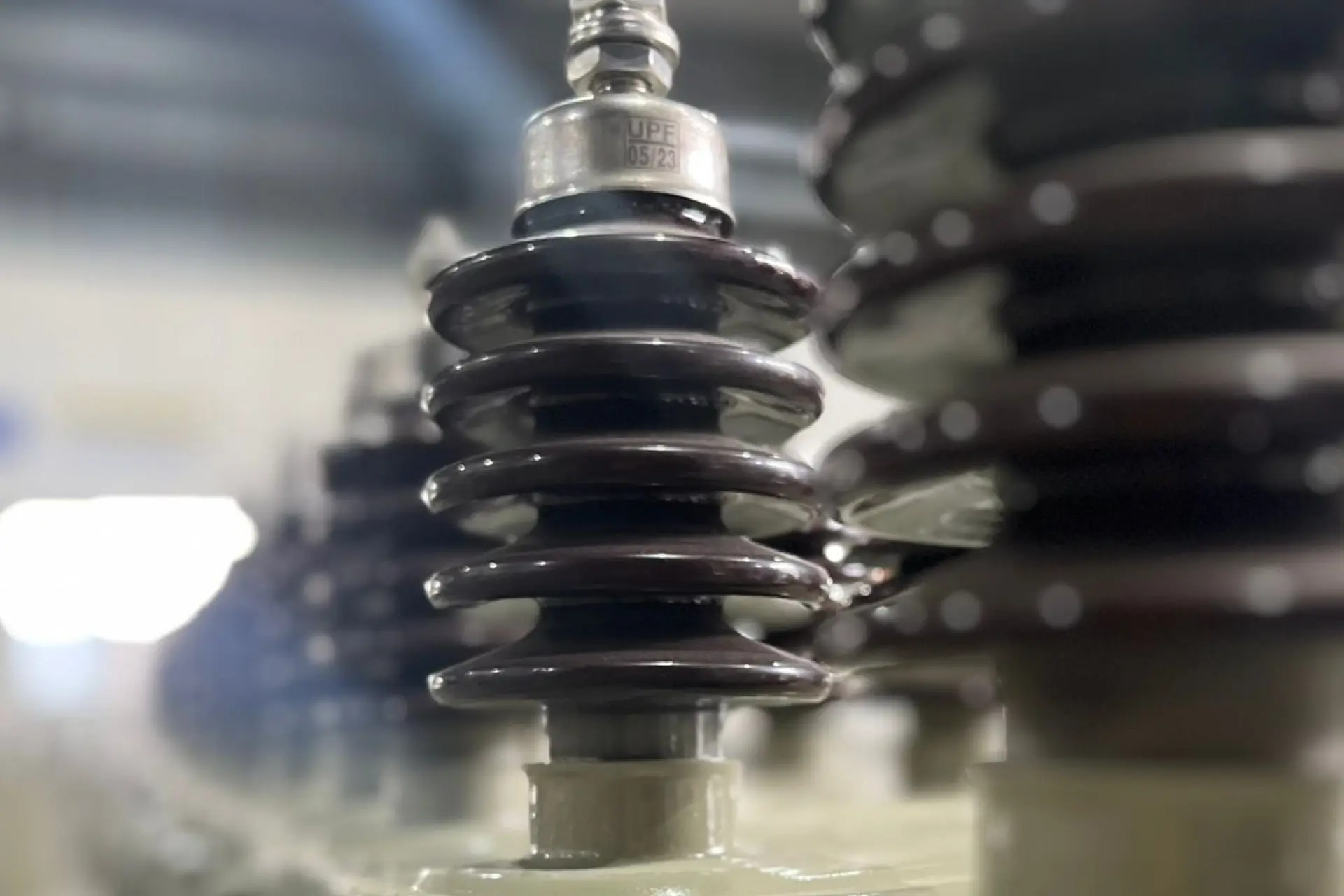
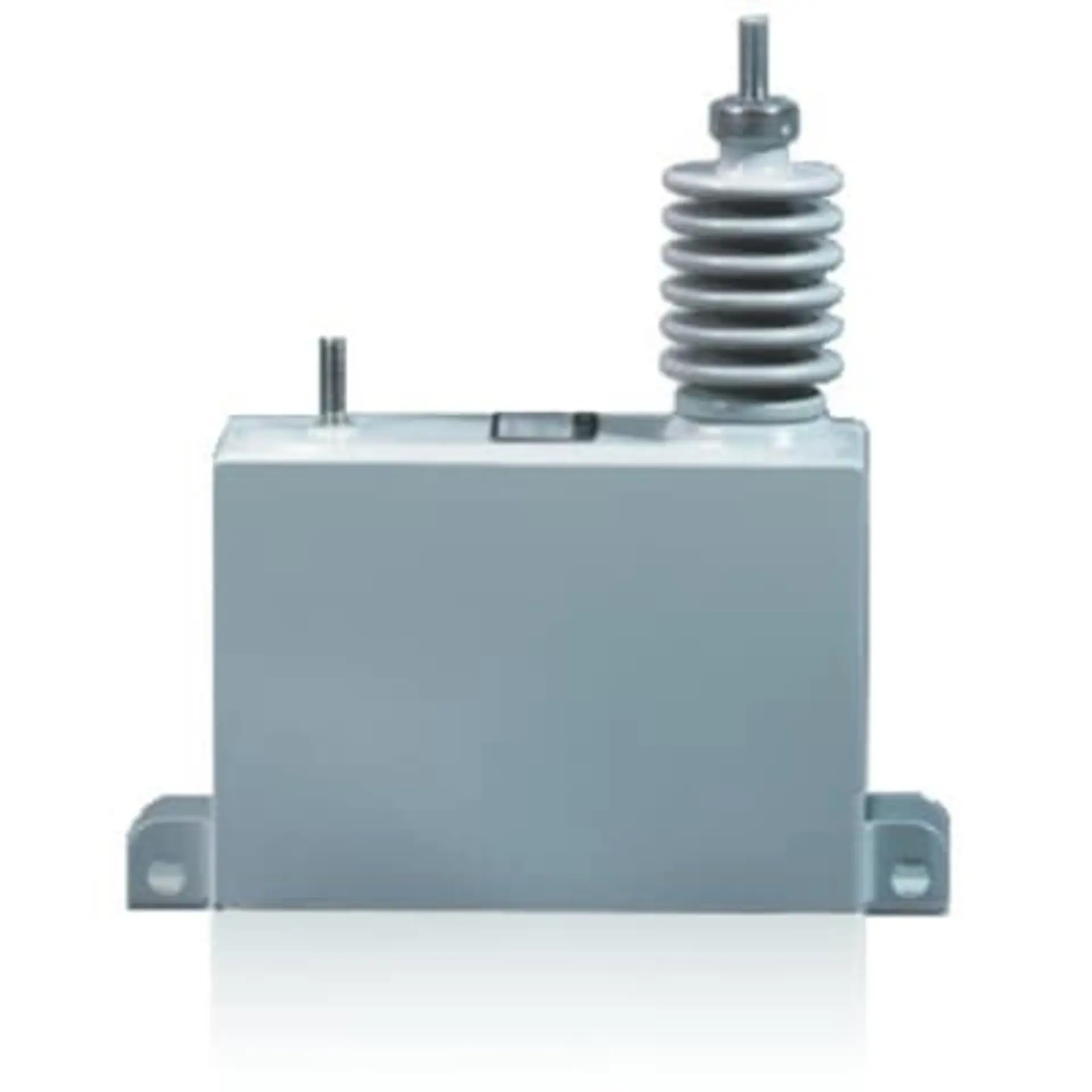
Surge Capacitors are connected across the terminals of transformers and other critical HV equipment to absorb and safely dissipate transient surge currents caused by lightning strikes, switching operations, and line disturbances. By restricting the rate of voltage rise and grounding the surge energy, they prevent insulation breakdown and extend the service life of protected assets.
How It Works?
Where Is It Used?
Power Transformers
Installed across HV transformer terminals to protect costly insulation from lightning and switching transients, the most common and critical application.
Critical HV Equipment
Protects motors, generators, switchgear, and other high-value assets in substations and industrial plants from transient overvoltage damage.

Key Benefits
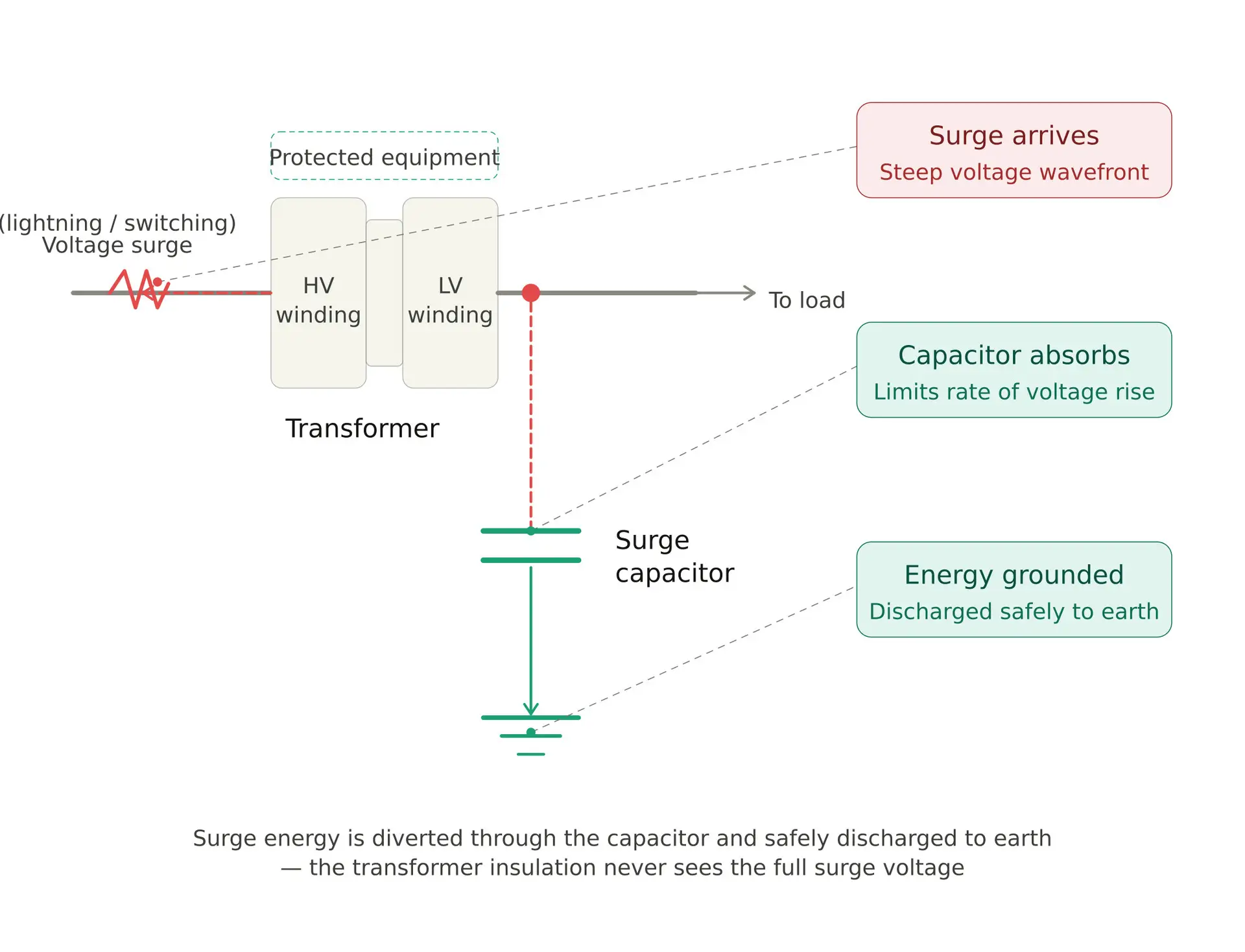
When a transient overvoltage strikes, the surge capacitor immediately limits the rate of voltage rise at the equipment terminal, preventing the steep wavefront from breaking down insulation. The captured surge energy is then safely discharged to earth, eliminating the threat before it can cause winding failure, flashover, or catastrophic equipment damage. A single surge event without protection can destroy a transformer that has been in service for decades.
Absorbs high-voltage surges caused by lightning, switching operations, or faults
Protects motor windings and transformer insulation from damage due to steep voltage fronts
Increases equipment life by shielding it from sudden voltage transients
Reduces costly breakdowns and unplanned downtime in critical machinery
Installed at the terminals of motors and transformers for point-of-use protection
Simple, passive device — no power supply or control required
Protect your transformers and critical HV assets.
Speak with our engineers to specify the right surge capacitor for your voltage class, equipment type, and site exposure.