
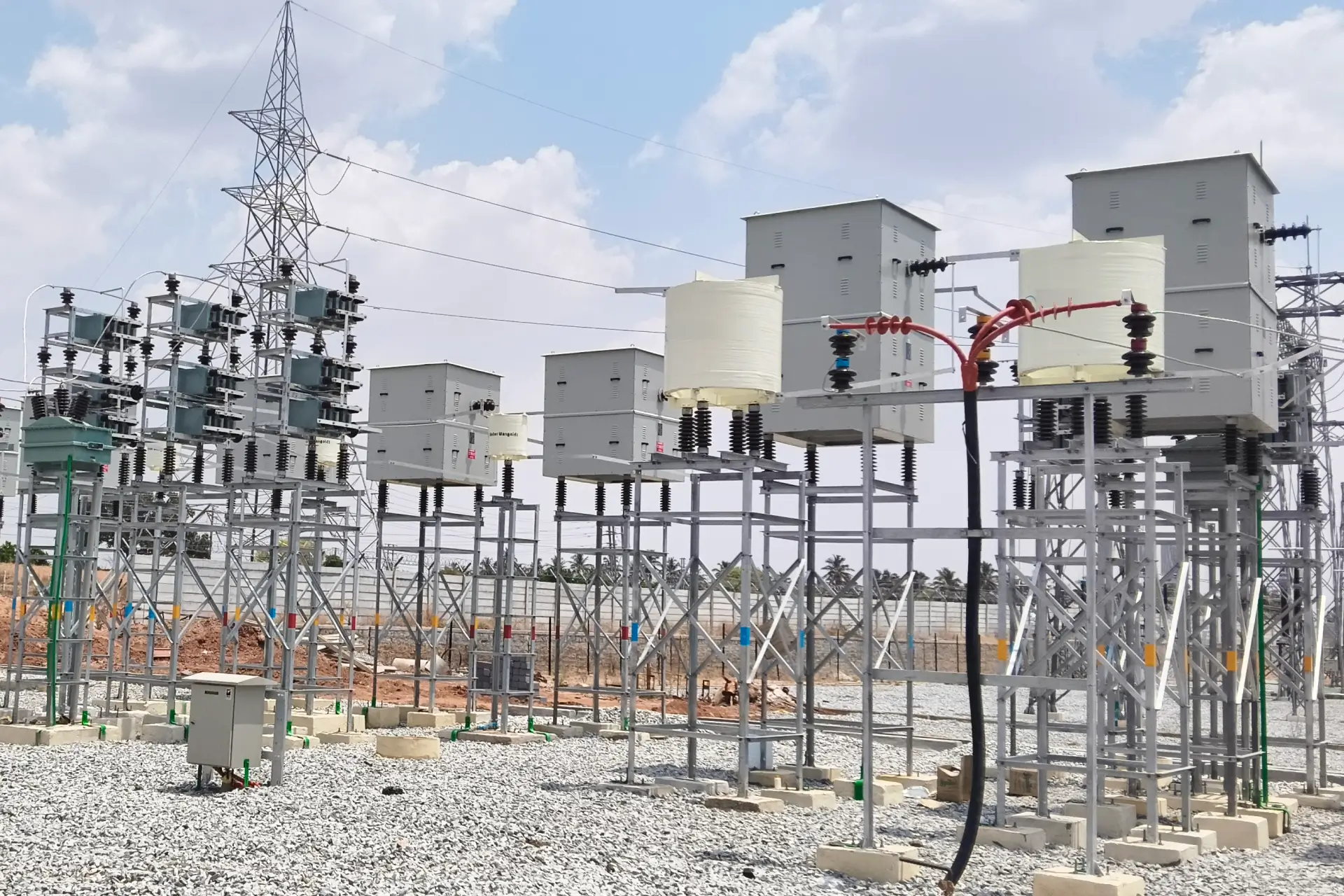
Modern industrial facilities run on more electronics than ever before — variable frequency drives, UPS systems, LED lighting, servo controllers, and switch-mode power supplies. These devices make operations more efficient and precise, but they share a hidden side effect: they distort the very power that feeds them. This distortion, known as harmonics, is one of the most underestimated threats to electrical system reliability today. At Cospower, harmonic mitigation is central to what we design, and in this blog, we explain what harmonics are, why they matter, and how the right mitigation strategy protects your equipment and your bottom line.
What Are Harmonics?
In an ideal electrical system, voltage and current follow a clean, pure sine wave at a fixed frequency — 50 Hz or 60 Hz depending on the region. Harmonics are distortions of this waveform, caused by non-linear loads that draw current in abrupt, non-sinusoidal pulses rather than smoothly. These non-linear loads include variable frequency drives (VFDs), rectifiers, arc furnaces, welding equipment, computers, and any device using power electronics to convert or control electrical energy.
Each non-linear load injects harmonic currents into the system at multiples of the fundamental frequency — the 3rd, 5th, 7th, 11th harmonics, and so on. When these harmonics accumulate across a facility, they distort the overall voltage waveform, and that distortion propagates through the entire electrical network, affecting equipment that had nothing to do with generating it in the first place.
Why Harmonic Mitigation Matters
Left unaddressed, harmonics create problems that are often misdiagnosed as unrelated equipment faults. Some of the most common consequences include:
For facilities with a high concentration of VFDs, UPS systems, or automated machinery, harmonic distortion isn’t a hypothetical risk — it’s an operational reality that quietly erodes equipment reliability and energy efficiency over time.
Common Sources of Harmonics in Production Facilities
Understanding where harmonics originate is the first step toward mitigating them effectively:
Harmonic Mitigation Solutions
No single fix exists for harmonic distortion. The right solution depends on the harmonic spectrum present, load characteristics, and system configuration. The main mitigation approaches include:
1. Detuned Reactors: When capacitor banks are installed for power factor correction, detuned reactors are added in series to shift the resonant frequency of the system away from main harmonic orders. This prevents harmonic amplification and protects both the capacitors and the wider network from resonance-related damage.
2. Passive Harmonic Filters: Tuned to specific harmonic frequencies (commonly the 5th and 7th), passive filters provide a low-impedance path for targeted harmonic currents, drawing them away from the rest of the system. They’re a cost-effective solution for facilities with predictable, dominant harmonic orders.
3. Active Harmonic Filters (AHFs): For facilities with variable or broadband harmonic profiles, active filters provide real-time, dynamic correction. They continuously monitor the waveform and inject compensating currents to cancel out harmonics over a broad frequency range, rendering them ideal for complex, changing load environments.
4. Line Reactors and Isolation Transformers: Used at the source, these components reduce harmonic injection from individual non-linear loads before it spreads through the facility’s electrical network.
5. Proper System Design: Sometimes the most efficient mitigation starts at the design stage — correct cable sizing, transformer derating, and load segregation can greatly reduce the impact of harmonics before additional filtering equipment is even needed.
Cospower’s Approach to Harmonic Mitigation
At Cospower, we don’t treat harmonic mitigation as an afterthought bolted onto a power factor correction system; we treat it as integral to designing a resilient electrical network. Our engineering team performs detailed harmonics analysis of your facility’s load profile before recommending a solution, guaranteeing that whatever we deploy, whether detuned reactors, passive filters, or active filtering systems, matches your system’s harmonic signature.
This diagnostic-first approach helps customers avoid the common pitfall of over-engineering (paying for filtering capacity they don’t need) or under-engineering (ignoring critical harmonic orders). Every Cospower harmonic mitigation solution is built with the same manufacturing discipline and quality control we apply across our entire product range, providing long-term dependability under real industrial operating conditions.
Harmonics are often invisible until they cause a failure, like a tripped breaker, an overheated transformer, or a capacitor bank that fails prematurely. But with the right diagnostic approach and mitigation equipment, these risks are entirely manageable. Addressing harmonic distortion isn’t just about protecting equipment; it’s about ensuring your entire power system runs as efficiently and reliably as it was designed to.
At Cospower, we help industrial and commercial facilities identify harmonic risks before they become costly problems, and design mitigation solutions that keep power quality and operations running smoothly.
Concerned about harmonic distortion in your facility? Contact Cospower’s engineering team for a harmonic assessment and tailored mitigation plan.